
As a business grows, managing storage, processing orders, tracking inventory, and coordinating shipping all at once becomes harder to handle internally. Space runs out faster than expected, order volume outpaces available staff, and shipping mistakes start costing more than they used to. This is usually the point where businesses start looking into what 3PL warehousing and distribution actually involves, since it offers a way to hand off these operations to a provider built specifically to manage them.
A third-party logistics partner does considerably more than store boxes on a shelf. It can manage receiving, inventory tracking, order picking, packing, shipping, and returns as one connected operation, which changes how a business handles its daily warehouse work almost entirely. The sections that follow walk through how the 3PL model actually works, what services it typically includes, and how to decide whether it fits a particular business.
What 3PL Warehousing Means for Modern Businesses
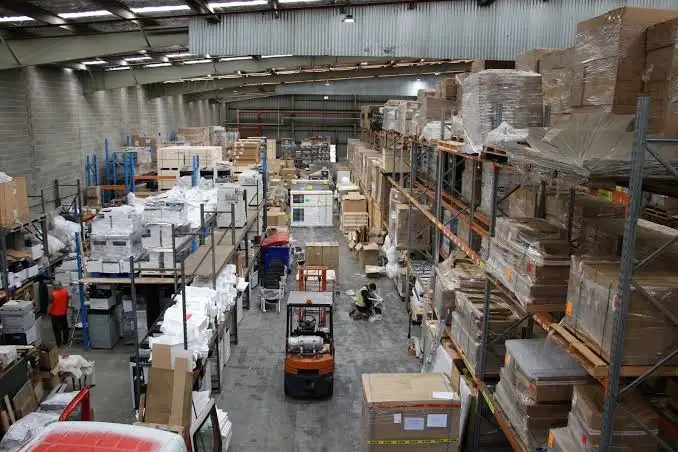
Third-party logistics warehousing refers to a business hiring an outside company to manage its storage, order fulfillment, and shipping instead of handling those functions in-house. The client sends its products to the provider’s facility, and from that point forward, the 3PL warehouse takes responsibility for storing, tracking, and moving that inventory whenever an order comes in. Inventory management sits at the center of this relationship, since accurate tracking is what allows a business to trust a third party with its stock in the first place.
How a 3PL Warehouse Supports Client Businesses
A 3PL provider stores, handles, and ships products on behalf of another company, acting as an extension of that business’s own operations rather than a separate entity. The client generally keeps full ownership of its inventory throughout the process, with the provider responsible only for handling and moving the goods correctly.
Where 3PL Fits Within the Supply Chain
A 3PL sits at the connection point between suppliers, warehouses, shipping carriers, retailers, and end customers, coordinating the movement of goods across each of these stages. This positions it as a working part of supply chain management rather than a standalone storage service sitting off to the side.
How 3PL Differs From Basic Warehouse Storage
Third-party warehousing involves active logistics operations, not simply renting empty shelf space. A 3PL handles receiving, order fulfillment, shipping coordination, and day-to-day inventory management, which is a fundamentally different service than a landlord leasing out a storage unit.
Why Businesses Outsource Warehouse Operations
Businesses typically move toward outsourced warehouse services when growth outpaces their internal capacity, whether that shows up as limited storage space, rising labor demands, or logistics that have simply become too complex to manage with existing staff and systems.
How 3PL Warehousing and Distribution Work Together
Warehousing and distribution are not separate functions inside a 3PL operation. They move as one continuous process, starting the moment inventory arrives at the facility and ending when a customer’s order is delivered. Understanding this flow makes it easier to see how 3PL storage and distribution actually connect in practice.
Receiving Inventory Into the 3PL Facility
When inbound shipments arrive, staff check the delivered products against expected purchase orders, counting and inspecting items before they are accepted into the facility. Each item is identified and logged into the warehouse system, which updates inventory records the moment the stock is confirmed.
Storing and Tracking Products Within the Facility
Once received, products are assigned specific storage locations based on factors such as size, demand, and handling requirements. These locations are tracked continuously, giving the business real-time visibility into exact stock levels and helping maintain the inventory accuracy that outsourced fulfillment depends on.
Picking, Packing, and Shipping Customer Orders
When a customer places an order, it flows from the business’s sales channel into the 3PL’s warehouse system, triggering the picking and packing process. Staff select the correct items, package them appropriately, and the provider coordinates outbound movement through carriers, sometimes relying on overland freight networks for regional deliveries, before dispatching the order as part of its broader shipping services.
Which Services Can a 3PL Provider Handle
3PL providers vary considerably in what they offer, and understanding the range of available services helps businesses compare providers more accurately. Reviewing a provider’s full logistics service offerings is usually the fastest way to see whether it can cover everything a specific operation needs, or whether it focuses mainly on core warehouse operations rather than a wider set of 3PL warehousing services.
Inventory Management and Warehouse Control
Core inventory management includes ongoing stock tracking, regular inventory counts, location management within the facility, and reporting back to the client. Strong 3PL inventory management gives businesses visibility into their stock without needing to manage the physical warehouse themselves.
Order Fulfillment and Value Added Services
Beyond basic picking and packing, many providers offer kitting, custom labeling, product assembly, and collaborative packaging services as part of their fulfillment offering. These additions can support different order models, from standard ecommerce shipments to more complex retail or subscription-based fulfillment.
Shipping Returns and Distribution Support
A complete 3PL service typically covers outbound shipping and carrier coordination, along with handling returns and reverse logistics when products come back from customers. These functions complete the fulfillment cycle, closing the loop between initial storage and the eventual disposition of returned goods.
How 3PL Services Improve Distribution Efficiency
Outsourcing logistics can affect speed, order accuracy, scalability, and overall cost, though the extent of these benefits depends on the provider and how well its capabilities match the business. Technology, established carrier relationships, operational experience, and flexible capacity are the factors that typically drive these improvements.
Scaling Storage and Fulfillment With Demand
A 3PL can generally absorb seasonal spikes and fluctuating order volumes more easily than a business managing its own fixed warehouse space. This flexibility in inventory storage and fulfillment capacity tends to matter most across various client industries, since demand patterns rarely look the same for a retail brand as they do for a seasonal manufacturer.
Using Technology for Better Inventory Visibility
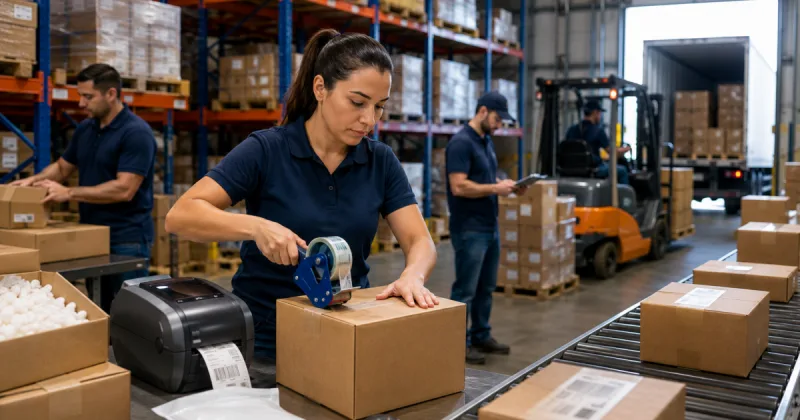
Most established providers run a warehouse management system paired with barcode scanning, system integrations, and regular reporting, giving businesses ongoing inventory visibility without needing their own software investment. This technology layer supports smoother day-to-day warehouse operations on both sides of the relationship.
Improving Shipping Speed and Order Accuracy
Providers with established, repeatable workflows tend to reduce unnecessary handling steps and lower the rate of order errors compared to less structured in-house processes. Faster, more accurate fulfillment directly affects how well a business meets customer delivery expectations.
Reducing Internal Logistics Workload
Outsourcing warehouse operations allows internal teams to redirect their time toward sales, product development, and customer relationships instead of day-to-day logistics tasks. It is worth noting that this shifts operational responsibility to the provider rather than eliminating it, so oversight and communication still matter.
What 3PL Warehousing Costs and What Affects Pricing
There is no single universal price for 3PL warehousing, since costs depend on inventory volume, order frequency, the specific services used, storage requirements, and contract terms. Understanding the common fee categories makes it easier to evaluate a pricing proposal accurately.
Storage, Receiving, and Fulfillment Charges
Most providers charge separately for storage, receiving, picking, and packing, though the exact structure varies between companies. Some use flat monthly storage fees, while others charge based on pallet space, bin location, or unit volume, so it is worth clarifying exactly which model a provider follows.
Shipping Returns and Special Service Fees
Shipping costs are typically billed based on carrier rates and package weight, while returns processing, custom labeling, kitting, and other special handling requests usually carry additional charges. These extras can add up quickly, so it helps to ask for a full breakdown rather than a single flat quote.
Volume, Location, and Inventory Affect Total Costs
Order volume, average inventory levels, warehouse location, product characteristics such as size or fragility, and seasonal demand swings can all shift total costs. Comparing overall operating costs across providers, rather than focusing on one advertised fee, gives a more accurate picture of what a partnership will actually cost.
How to Choose the Right 3PL Warehouse Partner
Selecting a 3PL provider benefits from a structured evaluation rather than a decision based on price alone. Location, capacity, technology, industry experience, service range, and communication all play a role in whether a partnership works well over time.
Check Capacity, Location, and Distribution Coverage
Warehouse capacity and strategic positioning directly affect how quickly orders reach customers and how much transportation costs add to each shipment. A distribution center located closer to major customer bases generally supports faster, more cost-effective delivery. Businesses evaluating multiple facility options sometimes review broader logistics freight support alongside warehouse coverage to make sure transportation and storage decisions work together rather than in isolation.
Review Technology Integrations and Inventory Visibility
Confirming that a provider’s warehouse management system connects properly with a business’s ecommerce platform, ERP, EDI, or API requirements should happen before signing any contract. Gaps in these integrations often surface only after the relationship has already started, which makes early verification worthwhile.
Compare Services Experience and Performance Standards
Industry experience and service capabilities should match what a business actually needs, rather than being chosen on general reputation alone. Reviewing service level agreements, order accuracy rates, inventory accuracy, communication practices, and performance reporting gives a clearer sense of what day-to-day operations will actually look like.
Is 3PL Warehousing Suitable for Growing Businesses?
Whether a 3PL makes sense depends heavily on where a business currently stands, since needs shift considerably as order volume, SKU count, and distribution requirements increase over time. Outsourcing is not automatically the right move for every business at every stage.
When Small Businesses May Need a 3PL
Rising order volume, limited internal storage space, an increasing packing workload, and growing shipping complexity are common signs that self-fulfillment is becoming harder to sustain. When these pressures start affecting order turnaround time, it is usually worth reviewing outsourced options.
When In-House Fulfillment May Still Make Sense
Businesses with low order volume, simple and predictable inventory, or strong internal fulfillment capabilities may continue to manage logistics in-house without meaningful drawbacks. Outsourcing is not automatically the better choice, and some businesses genuinely operate more efficiently by keeping fulfillment internal.
Signs Your Business Has Outgrown Its Warehouse
Persistent space limitations, recurring fulfillment delays, rising inventory errors, mounting labor pressure, and inconsistent shipping performance are all signs worth taking seriously. When several of these issues appear together, it is a reasonable point to start reviewing third-party warehousing as a practical alternative.
Final Thoughts on 3PL Warehousing and Distribution
Third-party logistics warehousing brings storage, fulfillment, shipping, and returns together into a single connected operation rather than a collection of separate tasks. Throughout this process, a 3PL provider manages inventory storage and order movement on a business’s behalf, while the client retains ownership of its products and oversight of the relationship.
The right logistics provider ultimately depends on a business’s specific products, order volume, service requirements, and growth plans, which means there is no single answer that fits every company. Businesses that are feeling the strain of managing storage, fulfillment, and shipping internally would do well to review their current warehouse operations and compare 3PL options, including TABZ Logistics LLC, that align with where their business is actually headed.
FAQs About 3PL Warehousing and Distribution
3PL arrangements vary considerably depending on a business’s products, order volume, and the specific capabilities of the provider involved. The questions below address common concerns that come up once businesses start comparing outsourced warehousing options. Each answer focuses on practical decision-making rather than a one-size-fits-all response.
A 3PL warehouse is operated by a third-party provider serving multiple clients, while a distribution center can be either company-owned or 3PL-managed, with its core function being the movement of goods rather than long-term storage.
Yes, many providers work with small businesses, though it usually makes the most sense once order volume, storage needs, or shipping complexity start outpacing what the business can manage internally.
No, the client generally retains full ownership of its inventory throughout the relationship, with the 3PL responsible only for handling, storing, and shipping the goods correctly.
Providers typically need details on average inventory volume, order frequency, product dimensions and weight, required services, and any seasonal demand patterns to give an accurate quote.
Most providers rely on warehouse management systems, barcode scanning, and regular cycle counts to keep inventory records accurate and give clients real-time visibility into stock levels.